


How football has been illustrated throughout the history of porcelain
Now, as the World Cup reaches its decisive stage, it’s a good moment to remember that football has left its mark not only on the stands and in broadcasts, but in unexpected materials too. Porcelain, for one.
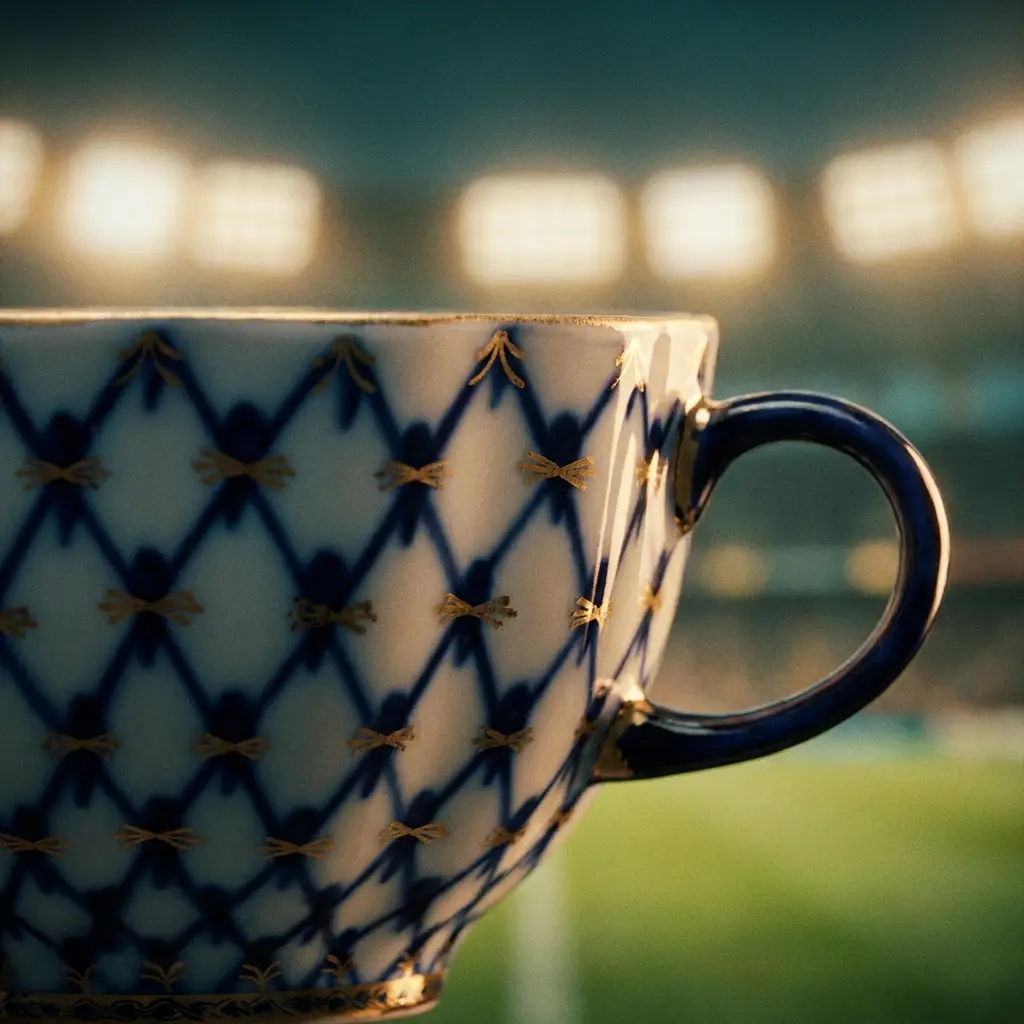
Not a one-off, but a recognizable line
Football imagery at the Leningrad — now Imperial — Porcelain Factory is no accident. It is a distinct, recognizable strand of mid-20th-century genre sculpture.
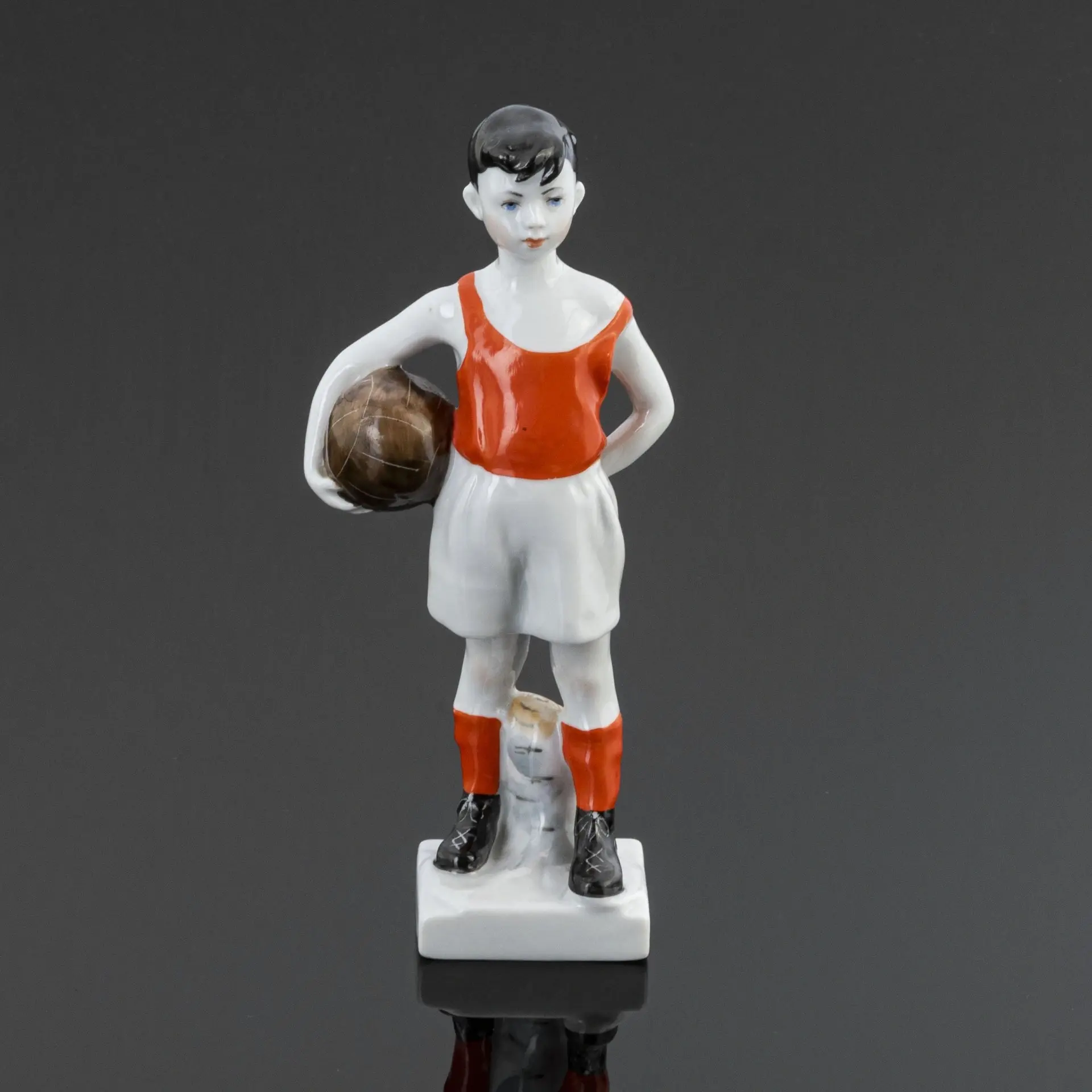
“Young Goalkeeper,” aka “The Footballer,” aka “Boy with a Ball”
Sculptor I. A. Venkova, painter E. N. Lupanova, LFZ, 1960s. The figurine depicts a boy with a ball tucked under his arm and exists in several painted variants — with a yellow, red, or blue jersey — and it is precisely these color variants that determine a piece’s collectible rarity today.
Jersey color variants: yellow, red, and blue. A piece’s rarity and collector value depend specifically on the color of the jersey.
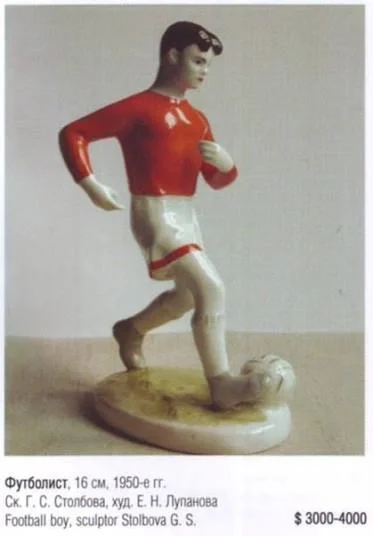
“Soviet Footballer”
Another piece from the same era — sculptor G. S. Stolbova, painter E. N. Lupanova, LFZ, 1950s–60s.
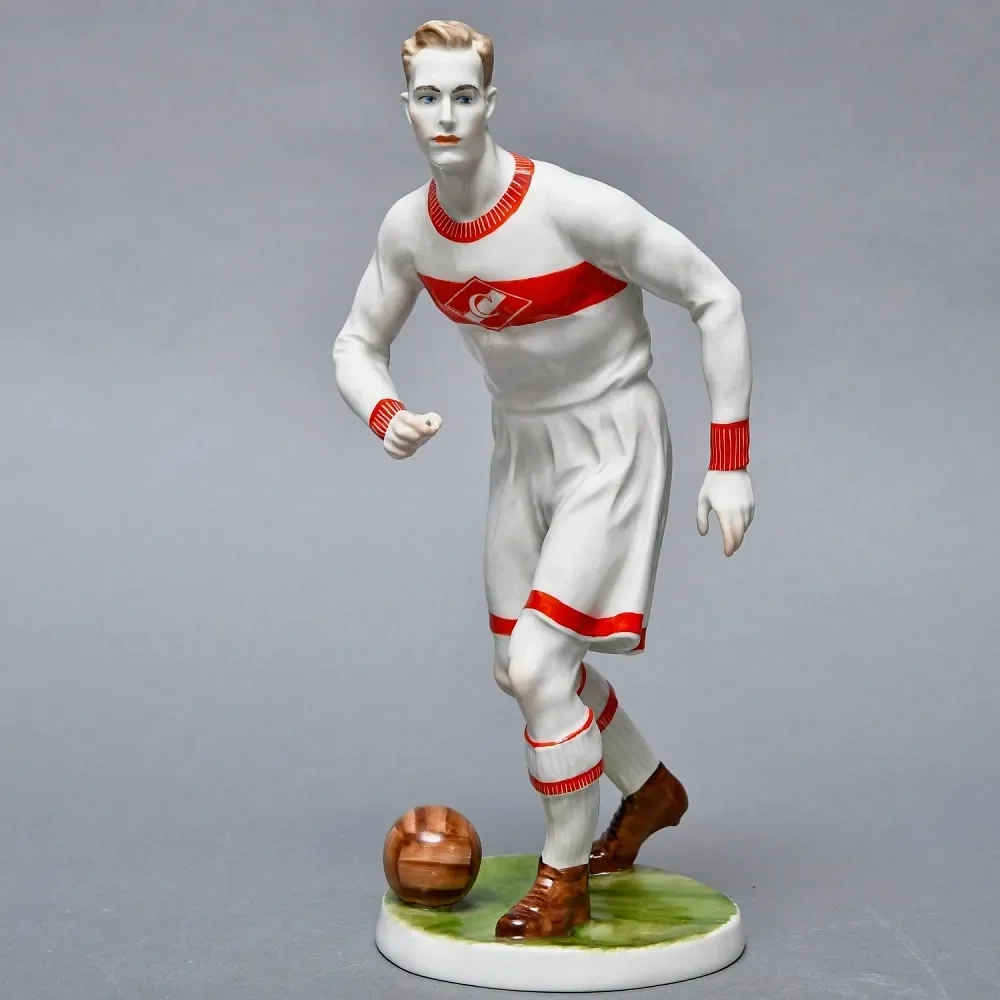
“Spartak Footballer”
Belonging to the same line is Vasily Stamov’s “Spartak Footballer” — a player modeled in a specific club’s kit rather than as an abstract athlete, which was more the exception for LFZ: the factory more often made nameless “young footballers,” with no club affiliation.
Part of a worldwide trend
The fondness for football imagery wasn’t unique to the USSR. In the second half of the 20th century, as football’s popularity surged worldwide, sporting subjects appeared increasingly often in the decorative arts as well. European porcelain manufacturers also produced figurines of athletes — footballers, tennis players, speed skaters — reflecting society’s growing interest in sport as part of modern culture.
For LFZ, football sculpture became part of that global trend: small, expressive figurines with recognizable imagery appealed to a broad range of buyers and remained in steady demand as decorative pieces and keepsake gifts.
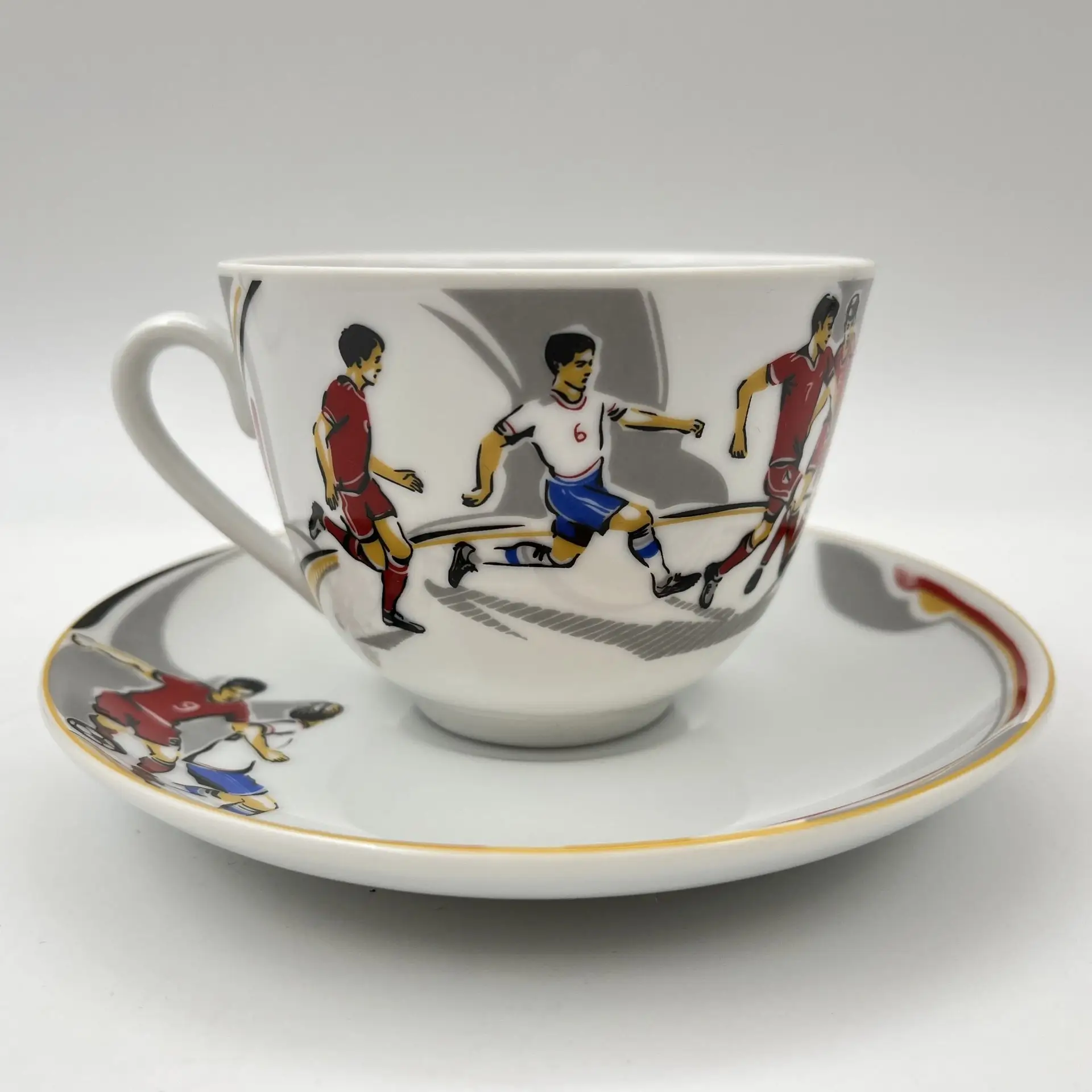
Today — the Final
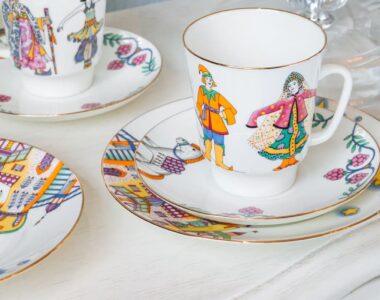
The theme lives on — no longer only in sculpture. Today, football imagery on porcelain shows up less as collectible figurines and more in everyday objects: mugs, cups, saucers — things meant for the kitchen table rather than behind glass in a cabinet. The form has changed, but not the substance: the recognizable image of a player with a ball remains the same simple, warm symbol it was half a century ago — only now it’s more often given as a gift than collected.
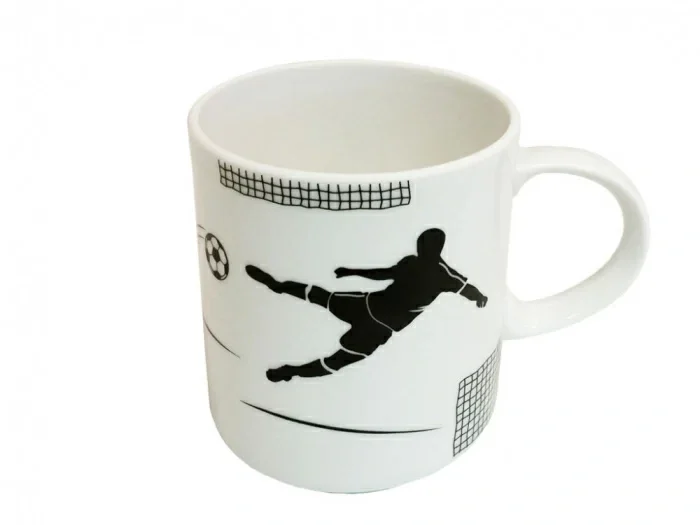
Cheering for a great game! May the strongest win — and porcelain will remind us that football has long been part of our culture.
#WorldCupFinal · #FootballOnPorcelain